

Hidden Histories in Plain Sight
We caught up with buildings archaeologist, author and broadcaster James Wright, whose work uncovers the remarkable stories concealed within Britain’s historic buildings. Ahead of the publication of his new book, The Buildings Archaeologist, and his visit to Bodmin this October, we spoke to James about Bodmin’s architectural heritage, local folklore, and why the stories of ordinary people deserve to be heard.
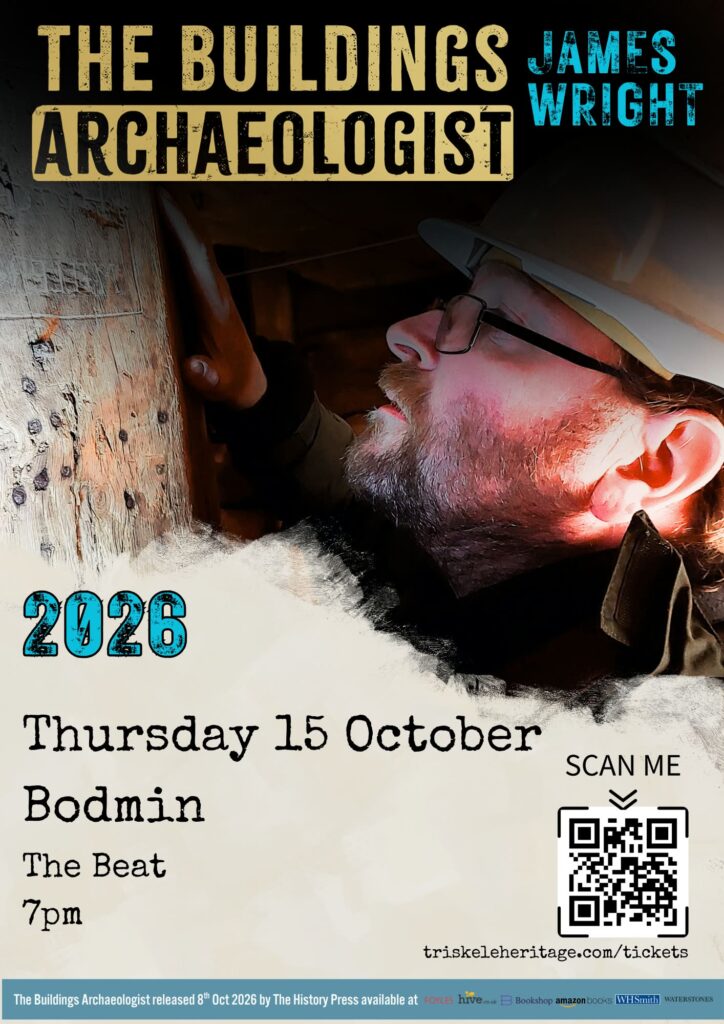
See James Wright Live in Bodmin
James will be appearing at The Beat, Bodmin, on Thursday 15 October 2026 at 7pm, as part of a national tour celebrating the release of his latest book, The Buildings Archaeologist, published on 8 October 2026.
Drawing on years of archaeological investigation and historical research, James will reveal how buildings can be read like historical documents, offering unique insights into the people who built, inhabited and adapted them over centuries.
Whether you’re fascinated by history, architecture, folklore or Bodmin itself, this promises to be an engaging and thought-provoking evening!
Click here to view the event and to reserve a spot.
Questions answered
If you could travel back in time and spend a day in Bodmin during any period of its history, which period would you choose and what would you most like to see, experience or learn?
“This is a common question posed to anyone who works in the heritage sector. My own answer is connected to my background. As someone who grew up in a working-class environment, I would be inclined to spend a day with an ordinary resident of Bodmin from the mediaeval or early modern period. Far too much attention has been granted to the elites from history. They only made up a tiny percentage of the population and, although they had an important impact, theirs are not the only stories to be told from the past. I’d like to sit down with a blacksmith, a stonemason, or a tin miner and ask them what life was really like. As I am a buildings archaeologist, I would be especially interested in what their houses looked like, how they used the various structures, and how the spaces that they worked at functioned. I’m thinking of properties in Bodmin such as 8 Fore Street which is a small townhouse that is at least seventeenth century in date. It was never a posh building but the stories of those that have lived or worked there will represent Bodmin as experienced by 99% of residents since it was built.”
Cornwall is full of places with rich histories and strong local identities. In your view, what makes Cornish buildings, heritage and storytelling so distinctive, and why do they continue to resonate with people today?
“A significant element of my career as a buildings archaeologist has been work related to vernacular architecture – the houses and workplaces of the working classes. Vernacular architecture is distinctive both regionally and over time. Cornwall has been shaped by its environment – a rocky maritime peninsular. Consequently, there are many stone buildings to be found from quite an early period. These might include the Romano-British community at Carn Euny, the mediaeval house known as the Old Post Office at Tintagel, or seventeenth century Tower Hill Farmhouse at Bodmin. I think that such buildings resonate because they are relatable structures as most people do not come from an elite background. Equally, they are intimately related to the landscape because they are literally made from the surrounding natural materials – they feel like an intrinsic part of Cornwall. Finally, there is an aesthetic factor at play which is also linked to landscape – these are frequently very beautiful buildings. Most people will have a favourite that they would love to live in!”
Bodmin has its fair share of historic buildings and local folklore. In your view, how do these elements work together to shape a town’s identity, and what role do they play in helping people connect with its past?
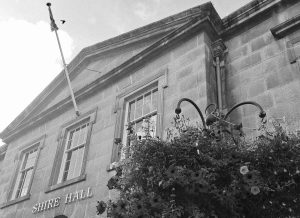
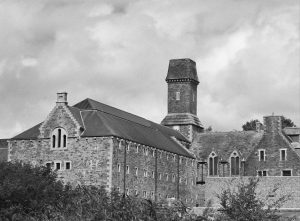
“Architecture matters to people because it shapes our lives in so many ways. A poor understanding of history and conservation can fundamentally affect the external appearance of a building to the public and the internal living of its residents. A good understanding of architecture can help inform the success of a town. Bodmin is an ancient town, but much of it was rebuilt during the nineteenth century. That has left a significant impact on the visual impact of the town as it was ‘improved’ – civic buildings such as the Shire Hall, former military structures such as Bodmin Keep, or domestic properties such as Sunnyside, Liddels, or The Friaries. However, lingering among these later buildings are glimpses of something older. On Fore Street are two properties, No. 33 and Chestnuts, which were remodelled in the nineteenth century but probably contain significant fabric belonging to older houses. At their cores they are possibly seventeenth century or earlier. This is far more common than most people realise. Such secrets are incredibly compelling – ancient buildings hidden in plain sight are genuinely exciting for lots of people!”
Your recent work explores the myths, legends and folklore that often become associated with historic buildings. What do you think drives people to create and pass on stories about particular places, and do those stories still have value even when they are not historically accurate?
“We all love a good story! Folklore offers an incredibly rich repository of information about how people thought (and continue to think) about their surroundings. A story does not have to be empirically true to offer truths about the world. For example, there are widespread rumours that there is a blocked up secret passage which ran between the female cells and the main block at Bodmin Jail. Although there are subterranean elements beneath the jail, they are more likely to be practical: drains, sewers, and water conduits. However, because the subterranean is mysterious and spooky for most people, romantic and ghastly tales grow up as alternative explanations for prosaic features. Often the subtext is connected to sex – why else would there be tunnels between the men’s and women’s quarters! The stories tell us more about the tabloid sensationalism of later times than the lived reality of the past, but those stories are still worth studying and understanding in their own right.”
As towns like Bodmin look to revitalise their high streets and town centres, what opportunities do you see for historic buildings, local heritage and storytelling to contribute to their future, rather than simply preserving their past?
“The word ‘preservation’ comes laden with undertones of stasis: ‘Let’s preserve this town in aspic just like it once was!’ Often there is an element of misty-eyed nostalgia wrapped up with such sentiments which is a world away from what life was really like in the past. Instead, we need to be practical in our approach to architecture. Sensitive conservation of individual buildings is to be encouraged, as is consideration of context and setting. There is no use in conserving a beautiful nineteenth century townhouse only to stick a modern glass and steel structure right next door. However, it should also be appreciated that towns, such as Bodmin, need to find new uses for old buildings. An unused building will soon decay, and a decayed high street will have a negative effect on the local economy. The legislation which protects ancient buildings by listing them is not intended to discourage development. Instead, it is intended to manage change in a responsible manner which will ensure that our stock of ancient buildings is available to the next generation. That is something worth fighting for.”