
We caught up with buildings archaeologist, author and broadcaster James Wright, whose work uncovers the remarkable stories concealed within Britain’s historic buildings. Ahead of the publication of his new book, The Buildings Archaeologist, and his visit to Bodmin this October, we spoke to James about Bodmin’s architectural heritage, local folklore, and why the stories of ordinary people deserve to be heard.
James will be appearing at The Beat, Bodmin, on Thursday 15 October 2026 at 7pm, as part of a national tour celebrating the release of his latest book, The Buildings Archaeologist, published on 8 October 2026.
Drawing on years of archaeological investigation and historical research, James will reveal how buildings can be read like historical documents, offering unique insights into the people who built, inhabited and adapted them over centuries.
Whether you’re fascinated by history, architecture, folklore or Bodmin itself, this promises to be an engaging and thought-provoking evening!
Click here to view the event and to reserve a spot.
“This is a common question posed to anyone who works in the heritage sector. My own answer is connected to my background. As someone who grew up in a working-class environment, I would be inclined to spend a day with an ordinary resident of Bodmin from the mediaeval or early modern period. Far too much attention has been granted to the elites from history. They only made up a tiny percentage of the population and, although they had an important impact, theirs are not the only stories to be told from the past. I’d like to sit down with a blacksmith, a stonemason, or a tin miner and ask them what life was really like. As I am a buildings archaeologist, I would be especially interested in what their houses looked like, how they used the various structures, and how the spaces that they worked at functioned. I’m thinking of properties in Bodmin such as 8 Fore Street which is a small townhouse that is at least seventeenth century in date. It was never a posh building but the stories of those that have lived or worked there will represent Bodmin as experienced by 99% of residents since it was built.”
“A significant element of my career as a buildings archaeologist has been work related to vernacular architecture – the houses and workplaces of the working classes. Vernacular architecture is distinctive both regionally and over time. Cornwall has been shaped by its environment – a rocky maritime peninsular. Consequently, there are many stone buildings to be found from quite an early period. These might include the Romano-British community at Carn Euny, the mediaeval house known as the Old Post Office at Tintagel, or seventeenth century Tower Hill Farmhouse at Bodmin. I think that such buildings resonate because they are relatable structures as most people do not come from an elite background. Equally, they are intimately related to the landscape because they are literally made from the surrounding natural materials – they feel like an intrinsic part of Cornwall. Finally, there is an aesthetic factor at play which is also linked to landscape – these are frequently very beautiful buildings. Most people will have a favourite that they would love to live in!”
“Architecture matters to people because it shapes our lives in so many ways. A poor understanding of history and conservation can fundamentally affect the external appearance of a building to the public and the internal living of its residents. A good understanding of architecture can help inform the success of a town. Bodmin is an ancient town, but much of it was rebuilt during the nineteenth century. That has left a significant impact on the visual impact of the town as it was ‘improved’ – civic buildings such as the Shire Hall, former military structures such as Bodmin Keep, or domestic properties such as Sunnyside, Liddels, or The Friaries. However, lingering among these later buildings are glimpses of something older. On Fore Street are two properties, No. 33 and Chestnuts, which were remodelled in the nineteenth century but probably contain significant fabric belonging to older houses. At their cores they are possibly seventeenth century or earlier. This is far more common than most people realise. Such secrets are incredibly compelling – ancient buildings hidden in plain sight are genuinely exciting for lots of people!”
“We all love a good story! Folklore offers an incredibly rich repository of information about how people thought (and continue to think) about their surroundings. A story does not have to be empirically true to offer truths about the world. For example, there are widespread rumours that there is a blocked up secret passage which ran between the female cells and the main block at Bodmin Jail. Although there are subterranean elements beneath the jail, they are more likely to be practical: drains, sewers, and water conduits. However, because the subterranean is mysterious and spooky for most people, romantic and ghastly tales grow up as alternative explanations for prosaic features. Often the subtext is connected to sex – why else would there be tunnels between the men’s and women’s quarters! The stories tell us more about the tabloid sensationalism of later times than the lived reality of the past, but those stories are still worth studying and understanding in their own right.”
“The word ‘preservation’ comes laden with undertones of stasis: ‘Let’s preserve this town in aspic just like it once was!’ Often there is an element of misty-eyed nostalgia wrapped up with such sentiments which is a world away from what life was really like in the past. Instead, we need to be practical in our approach to architecture. Sensitive conservation of individual buildings is to be encouraged, as is consideration of context and setting. There is no use in conserving a beautiful nineteenth century townhouse only to stick a modern glass and steel structure right next door. However, it should also be appreciated that towns, such as Bodmin, need to find new uses for old buildings. An unused building will soon decay, and a decayed high street will have a negative effect on the local economy. The legislation which protects ancient buildings by listing them is not intended to discourage development. Instead, it is intended to manage change in a responsible manner which will ensure that our stock of ancient buildings is available to the next generation. That is something worth fighting for.”
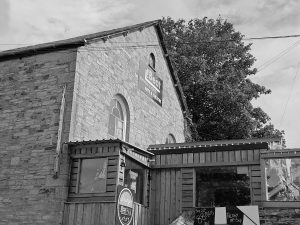
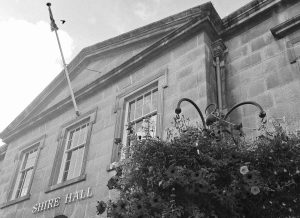
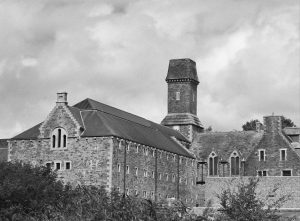
Bodmin is set to take centre stage in Cornwall’s cultural calendar in 2026 as the town prepares to host the annual Esedhvos Festival and Gorsedh Kernow ceremony.
Bringing together music, language, heritage, storytelling and celebration, the event will welcome Bards, performers and visitors from across Cornwall and beyond for several days of cultural activity in and around the town, culminating in the iconic bardic ceremony on Saturday 5 September 2026.
It will mark the first time Gorsedh Kernow has visited Bodmin since 1997 — and organisers say the town’s rich cultural history and central location make it the perfect setting for the event.
Grand Bard Gwythvosen Jenefer Lowe said: “We are delighted that the Gorsedh is coming to Bodmin. Our last visit was in 1997, and it is wonderful to be returning in 2026. Bodmin, the historic capital, lies at the heart of Cornwall and Cornish culture, and we look forward to working with the people of Bodmin to ensure a wonderful event next September.”
Founded to celebrate and protect Cornwall’s Celtic identity, Gorsedh Kernow champions Cornish culture in all its forms — from language, literature and history to music, dance, art and community traditions. Each year, the Esedhvos Festival also recognises achievements in Cornish culture through awards for adults and young people.
For Bodmin, hosting the event is another major moment in the town’s growing cultural story.
As Cornwall’s historic county town, Bodmin has long played an important role in the county’s civic and cultural life. Today, its independent businesses, creative organisations, historic landmarks and year-round events continue to make it a hub for Cornish heritage and contemporary culture alike.
Mayor of Bodmin, Councillor Liz Ahearn, said: “Bodmin is honoured to be chosen as host town for the Gorsedh Kernow in 2026. This is a significant cultural event for Cornwall, and we look forward to welcoming the Bards, performers and visitors to our town to celebrate Cornish culture, language and heritage.”
Over the coming months, a local organising committee will begin working with Gorsedh Kernow and community partners to shape a programme that reflects Bodmin’s identity, creativity and community spirit.
Visitors can expect a vibrant celebration of Cornish culture across the town — from performances and exhibitions to community events and the much-loved bardic ceremony itself.
More details about the 2026 programme will be announced in the months ahead.
Flamm, Cornwall’s contemporary art festival, will take place in Bodmin, Cornwall, in 2026 from Saturday 28th February to Sunday 1st March 2026.
Today, Flamm is delighted to announce the full programme, taking place across the town; showing work made by those living and working in Cornwall and the South West, many being supported by the festival to realise their ideas and create new works, as well as bringing global artists to the region for the first time, with partners including Liverpool Biennial and Counterpoints Arts.
Over 20 exhibitions, installations and events over the weekend will transform the Cornish town, from the platform of the heritage railway station to Bodmin Keep and Bodmin Jail, along the high street and paths of the town and in unexpected places.
Newly commissioned artists include:
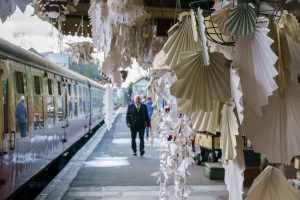 Nicola Bealing’s work spans painting, printmaking and installation. Drawing on historical narratives, folklore and everyday absurdities, she reimagines found stories with dark humour and psychological depth. For Nicola’s project, a forest of ghostly hanging baskets will transform the platform at Bodmin General into a surreal, unsettling landscape. Expanding the station’s usual eight baskets to around fifty, each will overflow with pale paper cut-outs of plants, animals and human forms. Suspended overhead, they will disrupt sightlines and movement, creating a playful yet disconcerting “glitch” in the everyday, where familiar station décor tips into something uncanny and unexpected.
Rachael Jones works between landscape, memory and human connection to place. Working with moving image, sound and installation, she often collaborates with communities to reveal layered local stories and overlooked voices. Her films balance poetic imagery with documentary sensitivity, creating intimate portraits of people and environments in flux. Rachael’s project reimagines hidden objects from Bodmin Keep’s archives while the museum undergoes repairs. Selected items will be reproduced as large weatherproof cut-outs, creating a trail around the site that leads to a film installation in the Keep’s trench. Drawing on diary entries from the collection, narrated by local voices, the film weaves personal and social histories.
Working in sculpture, installation and participatory projects, Alice Mahoney’s work often transforms everyday materials into playful yet thought-provoking assemblages that explore care, repair and transformation. Alice is interested in how objects hold memory and emotion, and how making can build connection and resilience. Alice will create an immersive installation combining light, sound, sculpture and film, inspired by Bodmin’s watery past, present and future. Beginning with participatory walks to sites such as wells, rivers and caverns, with Alice and Jonny Davey, the project gathers stories, sounds and imagery to create an audio map, sculptural works by Alice Mahoney and film by artist Naomi Frears, that move water in playful, unpredictable ways.
Rebecca Proctor’s work combines traditional craft with contemporary forms. Using hand-built and thrown methods, she explores the meeting point between utility and imagination, often drawing inspiration from natural processes, geology and coastal landscapes. Her pieces balance fragility and strength, celebrating clay’s tactile qualities and its connection to place. Widely recognised in the contemporary ceramic world, the Flamm project will see Rebecca realising her largest sculpture and first outdoor piece. Rebecca’s project responds to the legend of Rose Wright, a 19th-century Bodmin Jail inmate said to have cursed the prison. Inspired by the jackdaws she befriended, the work features around 20 black ceramic birds swirling above a charred wooden plinth that evokes the jail’s weight and history.
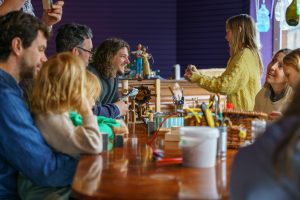 Colombian-born artist Carlos Zapata is known for his expressive carved wood sculptures and automata. Drawing on folk art traditions, personal history and global politics, his work tells stories of resilience, displacement and human emotion with bold colour and intricate detail. Often both playful and unsettling, his sculptures invite reflection on cultural identity, memory and the shared experiences that connect people across borders. For Flamm 2026, Carlos will present a large-scale sculptural automaton that transforms the familiar into the unexpected at Discovering 42.
Small Acts, led by Katie Etheridge and Simon Persighetti, create participatory artworks that bring communities together in inventive, joyful ways, often in the informal “third spaces” where people naturally gather. Visual artist Kitty Hillier works with biomorphic forms, layered abstraction and research into communication and plant intelligence. Together, they present Re:Rooted, a moving sculpture developed with young dancers from KBSK. Shaped by GPS mapping and creative walking, the root‑like form is carried through Bodmin, inviting audiences to navigate the town anew and discover hidden dances along the route.
Multidisciplinary artist Georgia Gendall works across sculpture, performance, writing, photography and participatory practice, often embracing absurdity, risk and unconventional materials. Her projects challenge ecological entanglements, interspecies relationships and the systems we inhabit, from worm‑charming championships to cow‑licked sculptures. For Change Here, Gendall transforms the Bodmin Railway announcement system into an uncanny conversation between two conductors. Loosely inspired by Cornwall Railway Society accounts and structured around thermodynamic cycles, the work drifts through themes of loss, nostalgia and change.
SHARP is a queer, working‑class, socially engaged artist whose interdisciplinary practice spans experimental video, photography, sculpture and sound installation. Their work explores remembrance, collective experience and queer perspectives on the human condition, with pieces held in major public collections and recent recognition from the Henry Moore Foundation and Exeter Contemporary Art Prize. Once We Were Held draws on research into Bodmin’s Bethany Project, a radical place of rest for people with HIV/AIDS. Combining sound, scent, visuals and sculpture, the installation creates a space of queer resilience, using reclaimed daffodils to connect LGBTQIA+ care histories with Cornwall’s landscape.
As well as co-commissioning SHARP’s project, the Flamm and Counterpoints Arts partnership has enabled an artist’s exchange project – putting the theme of the festival [Dis]Location in a wider context. Facilitated by artist Sovay Berriman, one of the co-commissioned artists in 2023, three Flamm artists are paired with three Counterpoints artists. Each pair exchanges on their socially engaged work, ideas and interests through a series of conversations in the run up to Flamm 2026. These exchanges will be documented and shared online, and the group will come together for a special episode in Sovay’s Meskla Podcast post-Festival.
The artist pairs are:
Flamm also holding a live podcast event during the festival to highlight the conversations around [Dis]Location, with Sovay Berriman & Liverpool Biennial 2025 Curator Marie-Anne McQuay, hosted by Jelena Sofronijevic of EMPIRE LINES podcast.
A collaboration with Liverpool Biennial will also bring several works from their 2025 event to Cornwall. The five selected commissions will be shown with two new commissions from Liverpool Biennial 2025: BEDROCK at Flamm 2026 by artists Linda Lamignan and Amber Akaunu:
Dear Othermother is a new film which tells a personal tale of single motherhood in Toxteth, Liverpool, by BAFTA Scholar and filmmaker Amber Akaunu. This autobiographical documentary-style film is inspired by the African proverb “it takes a village to raise a child”, and centres around single parents and their best friends who have built alternative ‘villages’ through which they collectively raise their children. Touched by the trees in a forest of eyes is a new multi-screen video work by Norwegian video and sound artist Linda Lamignan. Referencing the artist’s ancestry, the knowledge systems of animism and geology, Lamignan explores how the idea of land as a resource has been perpetuated throughout time by tracing the history of the palm oil and petroleum trade between Nigeria and Liverpool.
The festival programme is further enhanced by a wider programme of exhibitions, workshops and events led by artists and local communities.
This includes
Group exhibitions include Dialogues II with Heather Burwell, Tina Kutter, Jane Jobling, Sarah Bennett, Charlotte Squire, Chris Summerfield, John Elliott, Sara Bor, Keith Frake, Claire Gladstone, Stella Tripp at Discovering 42 and one by CAMP where the exhibition brings together 11 artists who recently connected through CAMP’s Sculpture and 3D KIN network, each with a longstanding engagement in sculptural materials and processes, and with space and/or site. Dialogues II refers to the exchanges and emerging shared themes that developed as the artists came to know one another and their respective practices. Contemporary Art Membership Platform (CAMP Membership CIC) is a member-led support and professional development network for artists, arts workers, and other creatives in the South West.
An exhibition bringing together two artists exploring what it means to be human through distinct yet overlapping perspectives. Through painting, Max Whetter approaches the subject from a male viewpoint, while Emma Digerud-White responds from a female perspective shaped by lived experience, care and emotional intimacy. Positioned within Flamm’s theme of [Dis]Location, the works consider emotional, psychological and relational states of belonging and estrangement, creating a dialogue that invites reflection on vulnerability, identity, connection and shared human experience.
Outdoor installations will pop up across the town: In the town square, with Jacqui Orly, visitors are invited to take part in a transaction. Penny for penny, pound for pound, money is exchanged for the exact same monetary value. A participant may hand over 50p and receive 50p in return, or exchange a £5 note for an equivalent amount made up of smaller denominations. There is no profit, no loss, and no apparent gain.
 Elizabeth-Jane Grose presents a multi-faceted installation in St Petroc’s Soldiers’ Chapel, examining the experience of [Dis]Location through the stories of people who experienced war. Using craft-based techniques and materials, Grose creates evocative images from stuff of the lower ranks of the art world, challenging notions of a visual hierarchy.
Elsewhere, Woven voices: The Bodmin Dress Project is a collaborative textile artwork created by local artist Rebecca Wood with the Bodmin community. Through shared stories, memories, and handmade contributions, the dress reflects personal and collective transformation, celebrating Bodmin’s past, present, and creative spirit. It will be in the town’s Air Ambulance shop and will include performances. Another textile work will be by Hannah Jacobs and participants at Kinsman Estate. A Tapestry for tickets to anywhere is a collective artwork initiated by Hannah Jacob with over 100 contributors all over Cornwall, now including additions from the residents at the Kinsman and Treningle Estate. Over the last few weeks, Hannah and the residents have used collage, movement and drawing to explore how public transport affects our lives and our connection to each other, and document the interesting and significant journeys in their lives.
Work by the community and with them is also seen in Alexander Prynne’s HERE, an immersive installation piece that explores and evokes neurodivergent safe spaces and experiences. It has been created by an autistic artist in collaboration with the local neurodivergent community for an authentic experience. Alexander Prynne is an autistic creative based in Bodmin. He creates work across a range of mediums including theatre, poetry and film.
Meanwhile, Amanda Young and SkillSHARE participants’ piece is a fun, interactive installation in the form of a walk-in book dedicated to the life stories of SkillSHARE’s participants, offering visitors the opportunity to engage with the storytelling aspect of the project and to explore their own narratives as a result. The Storybook of Bodmin aims to see people come out of the shadows to recognise and discover their own significance through its pages, thus exploring their own mental and physical health and aspirations, and the place of Bodmin within this.
Bodmin sits at the heart of Cornwall, where rich history, creative culture and vast natural landscapes meet. In its lively and wide-ranging spaces – ancient streets, moorland, woodland, communities, and country estates – it is a place that rewards those who dig a little deeper. It’s a place where discoveries are made. 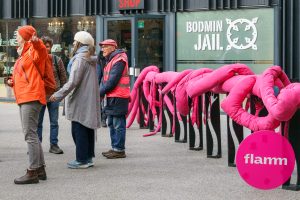
In addition to the festival, art lovers can also explore visitor attractions such as Bodmin Jail, Bodmin Railway or St Petroc’s Church, where history is at their fingertips. Bodmin is also a natural playground, where moorland gateways, rolling countryside, the Camel Trail and lush woodlands invite discovery at every turn. Visit Bodmin Moor, the rolling estate at National Trust’s Lanhydrock or take a stroll in Cardinham Woods.
Music, comedy, dance and cinema come together in glorious technicolour in the town. Organisations like intoBodmin, The Beat and St Petroc’s Church throw their doors wide to creative events and performances, and with a wealth of natural inspiration, Bodmin is also home to a hive-like community of creatives.
Get up close with their work at one of the local galleries – you’ll find them tucked in streets and studios around the town. In Bodmin, you’ll find workshops in everything from art and crafts at the Bodmin Gallery & Creative Studio, to sustainability and science at Discovering42.