



Family Discovery
Set out on this short and easy circular trail, with lots for young explorers to uncover.
Family friendly | Approx. 40 mins
Step back in time to Bodmin’s early days, where stories can be found up high and down beneath your feet. Follow the trail of ancient monks, Cornish saints, and Victorian criminals.
-
Start
1. Mount Folly
The ground beneath your feet was once a medieval garden and cemetery, belonging to a friary. This was a religious house similar to a monastery, where friars (like monks) lived.
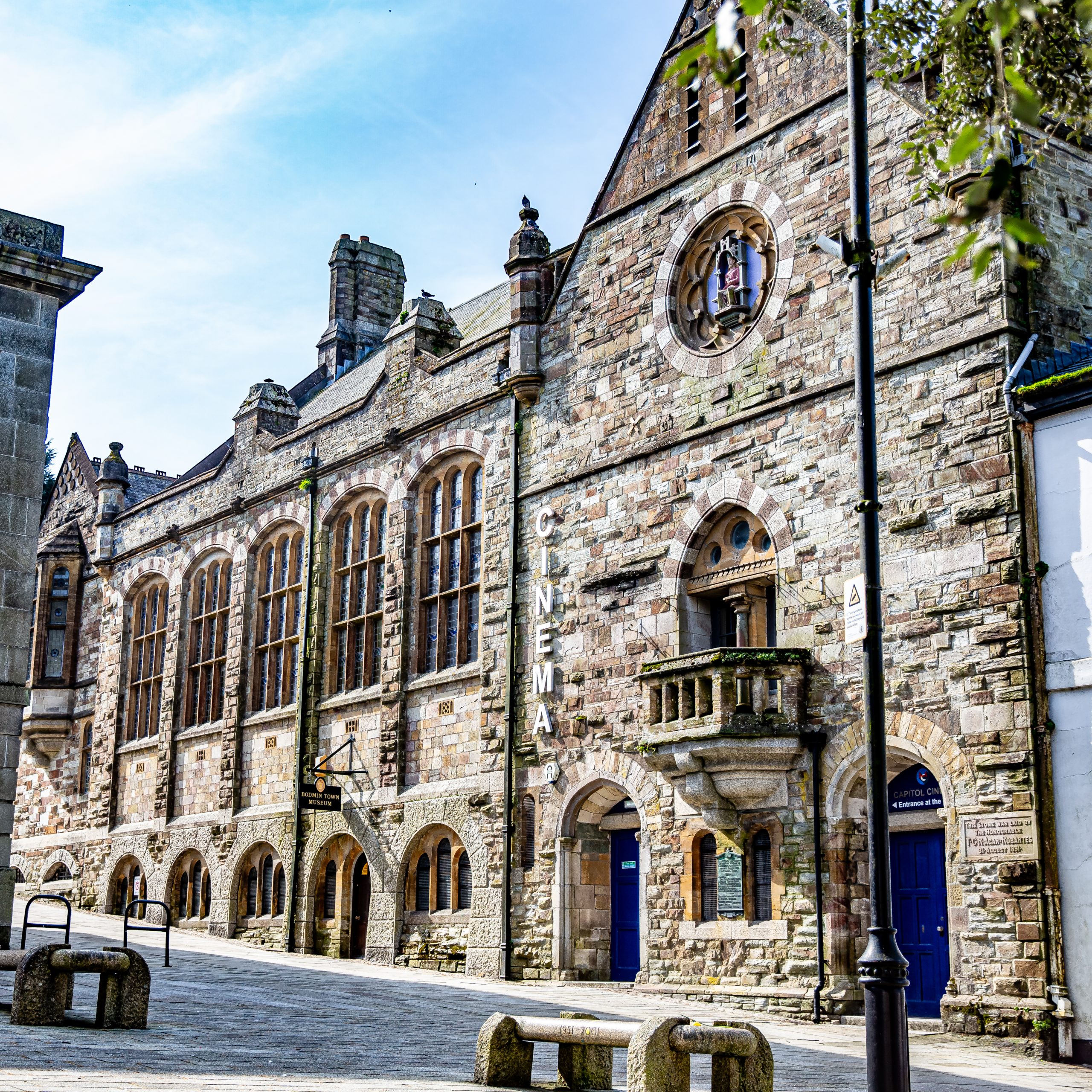
Today, the Shire Hall stands on the location of the old friary church, which was built around 1239. Although this was used for centuries, parts were demolished in 1836, and replaced with the building you see now. In more recent history, the hall was Bodmin’s courthouse.
The building on the right is known as the Public Rooms. It’s now home to the Bodmin Town Museum, but before this, the location had lots of different uses. Through time, it has been part of the friary church, a corn market, a grammar school, a drill hall (for soldiers), and a civil court.
Look for...
Bodmin has its own seal: an official “stamp” that represents the town. Seals are sometimes carved into buildings. Can you find Bodmin’s seal?
Where next?
When you’re ready to carry on, take a walk down Honey Street towards St Petroc’s Church. Look out for the copper scenes on the benches and signposts, they each tell a story about Bodmin. Cross the road to reach the stone steps next to St Petroc’s Church.
-
2. St Guron's Well
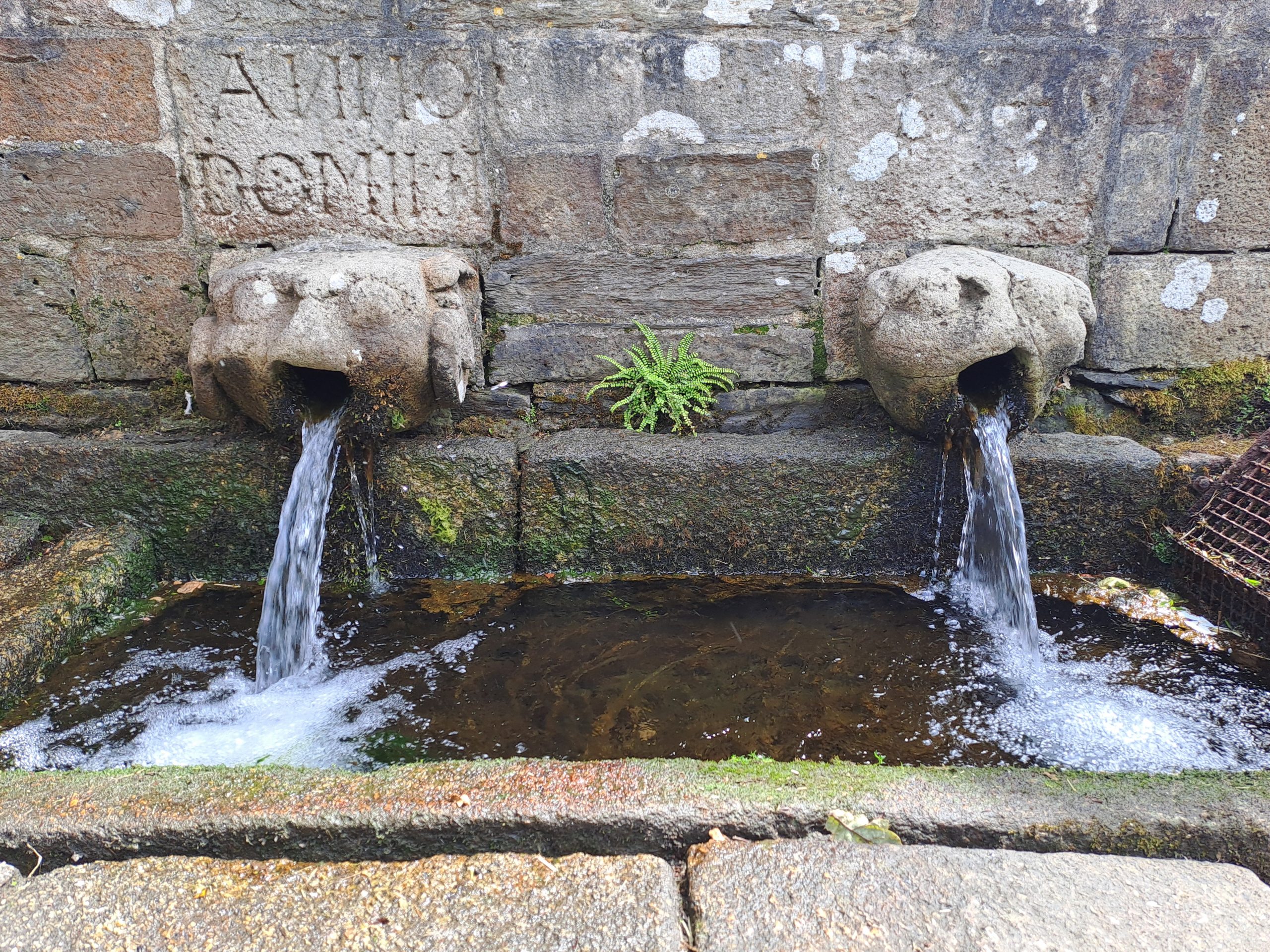
By the steps of St Petroc’s Church, you will find a medieval granite drinking trough, with two gargoyles above. Although the date here is 1545, this structure is probably much older.
Unlike the trough we saw earlier, this wasn’t only for animals. It was actually the town’s main water supply until the early 20th century (although cows also drank from the side trough!).
Did you know...?
Gargoyles are medieval water spouts, designed to aim water away from walls. They often have grotesque carved faces, but some are also a mix of humans and animals.
- One of these gargoyles has horns, and one has long ears. What would you make a gargoyle look like today?
-

3. St Petroc's Church
Note
There are stone steps up to the church at one side, but you’ll also find level access from Priory Road (opposite St Petroc’s Parish Centre), or you can walk down through the graveyard from Church Lane. The church’s opening times vary, so do check before visiting.
St Petroc was born in Wales but travelled to Cornwall in AD 518. He originally settled in Padstow, but moved to Bodmin (then known as Dinurin) when an angel told him to find a “remote part of the wilderness”.
This church, dedicated to him, was built in the late 15th century, but a much older Saxon church once stood here. Very little of the past structure remains, but if you look closely at the lower parts of the tower, you’ll see clues to its past – these sections were restored by the Normans in 1066.
During certain seasons, you might see signs of other folk living here. Small doors can pop up sometimes, so while you walk, keep watch for any little visitors.
Look for…
When St Petroc arrived in Bodmin, this site became part of his monastery. If you head inside the church, you’ll see an ancient box said to contain his bones. These bones have been stolen twice since Petroc’s death. First, they were taken to Brittany in 1177, before being brought back on the orders of Henry II. In the 1990s, they were stolen again, but later found in a field in Yorkshire.
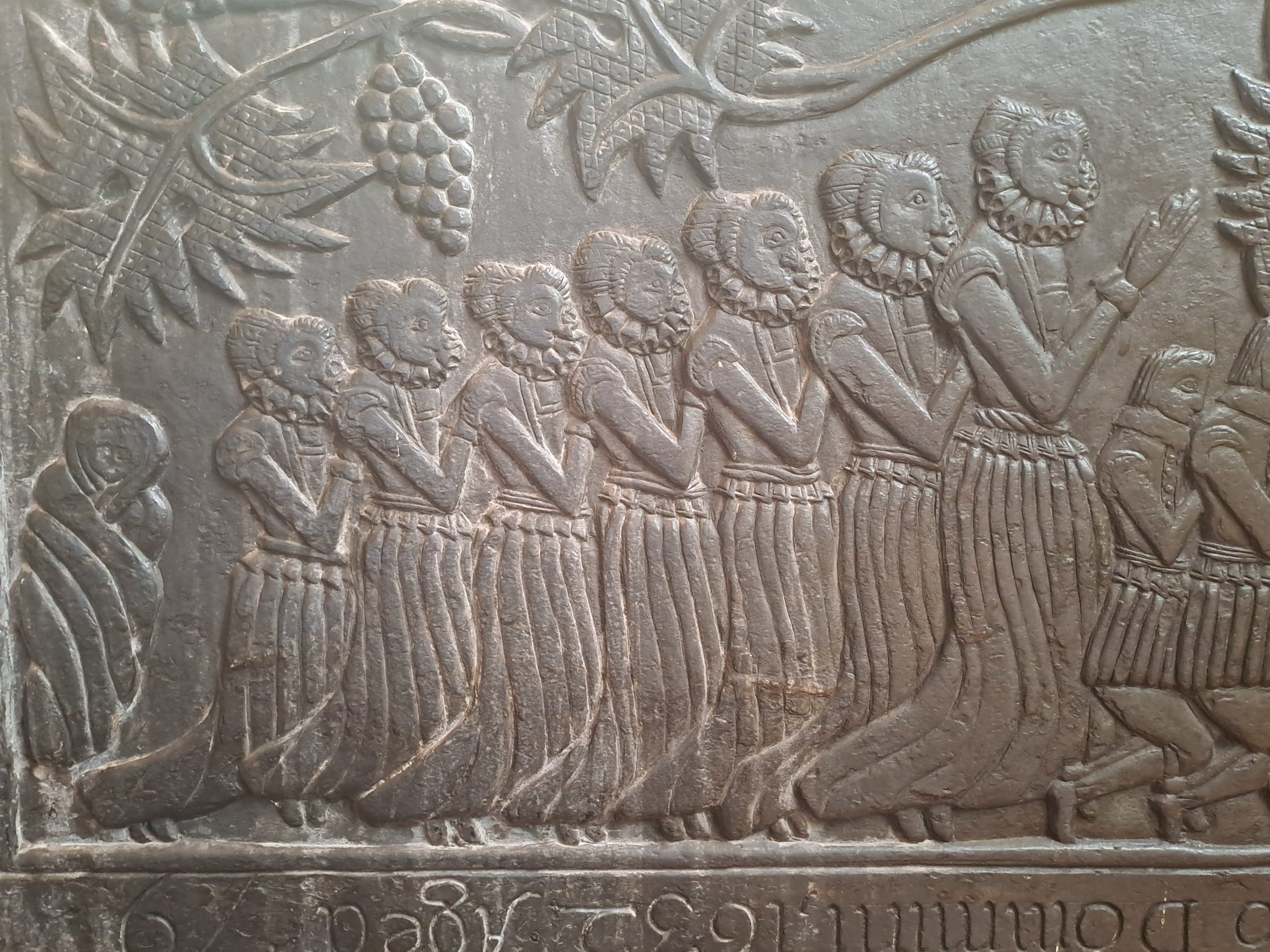
- The memorial stone of Richard Durant shows his two wives and 20 children. Can you find it and count them all? (Hint: it’s on a wall not far from the entrance.)
Did you know…?
Our church bell once rang every evening at 8 o’clock. Hundreds of years ago, this sound meant it was time for everyone living in the town to go home, and for the local pubs to shut their doors.
Where next?
The ruined chapel of St Thomas Becket is a very short walk away. You’ll find it in the church grounds, so head outside and look around. Can you see tall, empty window arches?
-
4. Chapel Ruins
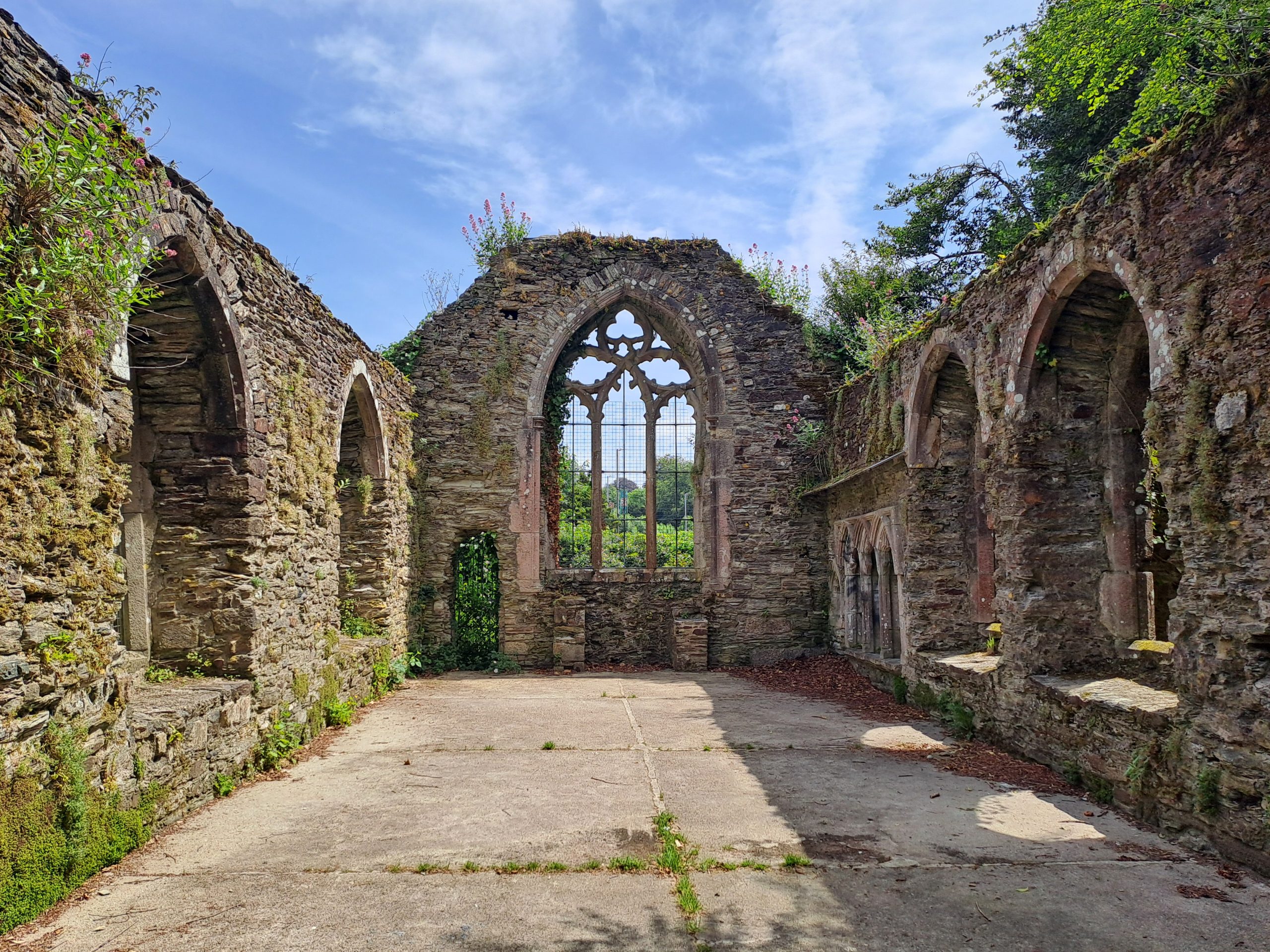
These ruins have a long and interesting story to tell. This was once a chapel, built in 1377 in memory of St Thomas Becket. In the mid-1500s, it became a grammar school, known as “the Bonehouse”.
During later Victorian times, people stopped using the building and in 1900 its roof finally collapsed. Today, it’s a ruin, but it’s still officially protected.
- If this school were called “the Bonehouse”, what name would you give its headmaster?
Did you know…?
Thomas Becket was Archbishop of Canterbury, but argued with King Henry II over the rights of the Church. Because of this, he was killed by the king’s followers and later became a saint.
Where next?
Feel free to sit or explore among the peaceful chapel ruins. When you’re ready, our next stop will be Priory Park. Leave the church grounds and head left up the main road to cross at the pedestrian crossing. Continue on your left and take the first right turn to enter the park.
-
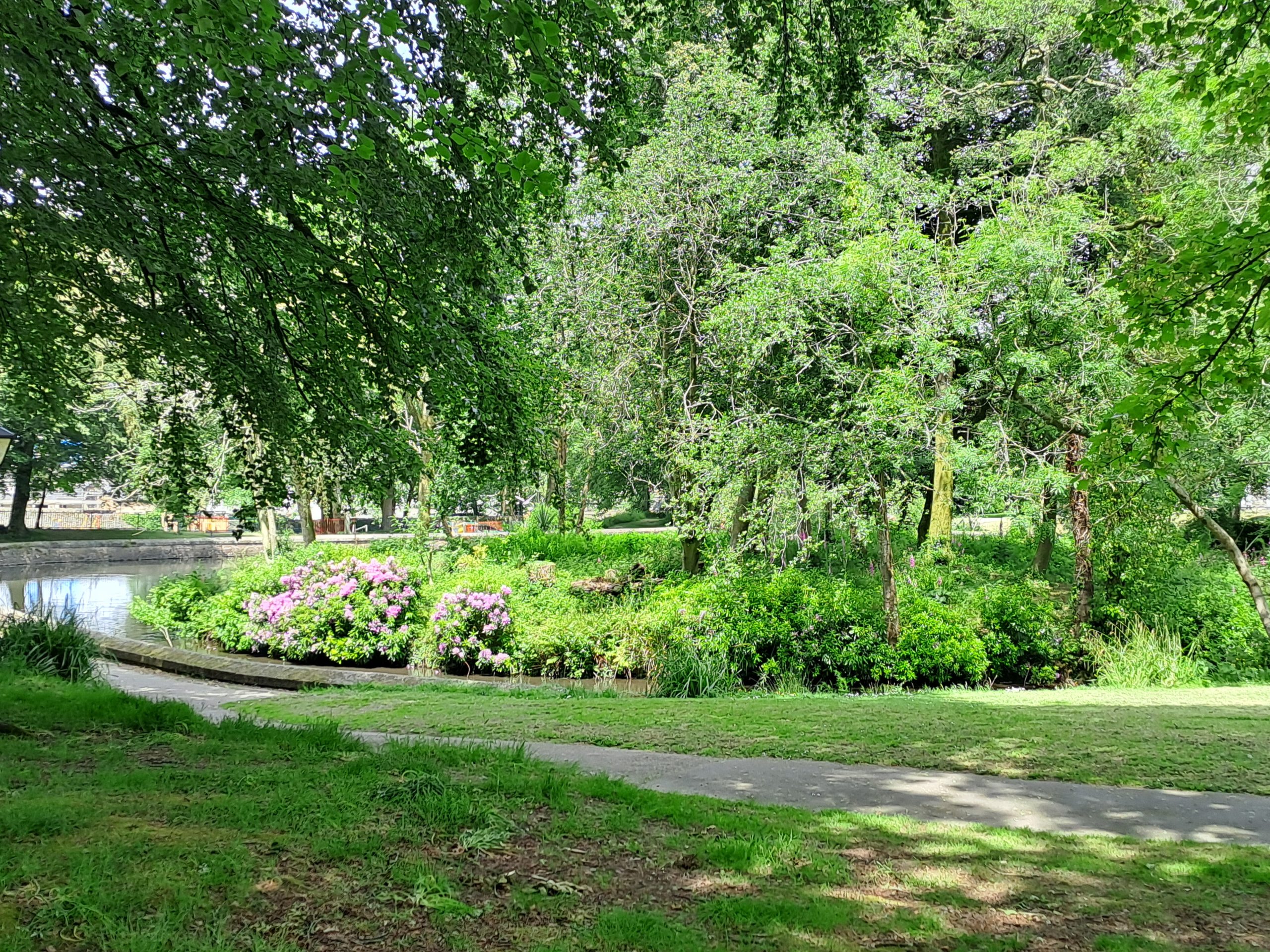
5. Priory Park
This park was once part of St Petroc’s priory (a type of monastery). Tucked away somewhere nearby are the ruins of the ancient priory building. Today, these are the only reminders of the busy, lively place this would have been.
- Can you find the priory ruins? (Hint: head towards the pond.)
Look for...
Because it has a mix of water, trees, and open, grassy spaces, Priory Park is home to all kinds of wildlife. There might be bees, ducks, squirrels and frogs around you. What living creatures can you see or hear?
Did you know…?
When the priory stood here, this pond was a “stew pond”. This means it was specially added to provide fish for the monks to eat. At this time, Bodmin was much smaller than it is now, and it wasn’t easy to shop for food. Keeping rainbow trout, brown trout and carp here made a handy nearby supply.
Where next?
If you’ve got time to spare, Priory Park is a great place for picnics and play. There’s a large children’s play area, and lots of space to run around in. To continue the trail, stroll through the playground (leading to the car park) and pause next to the toilets.
-
Finish
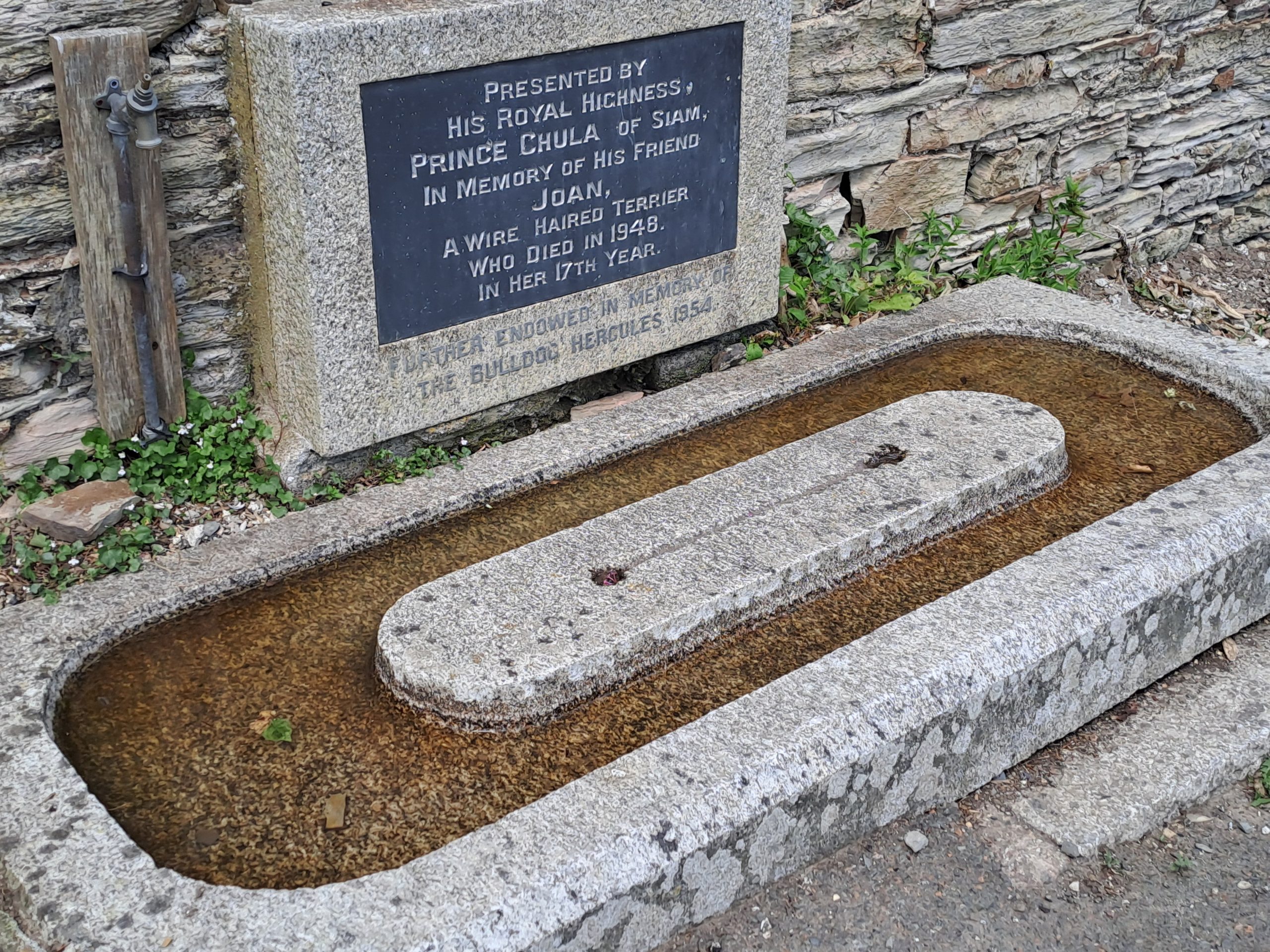
6. Drinking Trough
Can you see the rectangular stone structure, close to the ground? This is actually a granite drinking trough. It was placed here in memory of two dogs: a wire-haired terrier called Joan, and a bulldog named Hercules.
Their owner was Prince Chula of Siam (now known as Thailand). He was a grandson of the country’s King Chulalongkorn, but came to live in Britain in 1932. He married here, and lived in Cornwall (at Tredethy House, nearby) for the rest of his life.
- Think: what would you build to remember a favourite animal?
Where next?
Stroll down the street towards the tall, historic buildings and you are back where you started: Mount Folly. As you cross, the pavement is lowered to provide easy access for pushchairs and mobility scooters.

